
Law-enforcement officers are entrusted with extraordinary authority. They can detain people, make arrests, use force, conduct searches, gather sensitive information, and initiate actions that can permanently alter someone’s life. With that level of public power comes an equally significant responsibility: accountability to the communities they serve.
Transparency does not mean assuming every officer is corrupt, dishonest, or abusive. It means recognizing that public trust is strongest when actions can be examined, policies can be questioned, complaints can be reviewed, and mistakes or misconduct can be addressed rather than hidden. Body-camera footage, incident reports, disciplinary records, Georgia POST records, use-of-force documentation, court filings, policies, audits, and other public records can all help citizens understand how law enforcement operates.
At JAW GA News, our position is straightforward: supporting good law enforcement and scrutinizing law enforcement are not contradictory. In fact, meaningful accountability can protect ethical officers by separating documented misconduct from broad accusations against everyone wearing a badge.
Transparency can expose wrongdoing, but it can also disprove allegations, provide missing context, and show when officers acted appropriately. All of those outcomes matter.
Public trust cannot be demanded through a badge or press release. It has to be earned through conduct, accountability, evidence, and transparency.
“A badge represents authority. Transparency proves that authority is being used responsibly. Accountability does not weaken good law enforcement. It strengthens the public trust good officers depend on.”
— JAW GA News
Transparency becomes especially important when law-enforcement actions are questioned. A viral video, witness statement, police report, or official press release may show only one part of an incident. Responsible scrutiny requires examining the broader record: body-camera footage, dispatch records, incident reports, warrants, policies, disciplinary history when relevant, court documents, witness accounts, and the officer or agency’s explanation. Context should never be selectively applied only when it supports the conclusion we already prefer.
At JAW GA News, we believe accountability must also distinguish individual conduct from institutional problems. One officer’s misconduct does not establish that an entire department is corrupt. At the same time, repeated documented complaints, policy violations, disciplinary problems, questionable practices, or failures of supervision can raise legitimate questions about whether a problem extends beyond one person. Patterns require evidence, not assumptions.
Transparency ultimately protects everyone involved. It gives citizens evidence with which to evaluate police conduct, gives officers an opportunity to demonstrate when accusations are unsupported, and gives departments information needed to identify genuine failures. The goal should never be “pro-police” or “anti-police.” The goal should be accurate, accountable policing that deserves the public’s confidence.
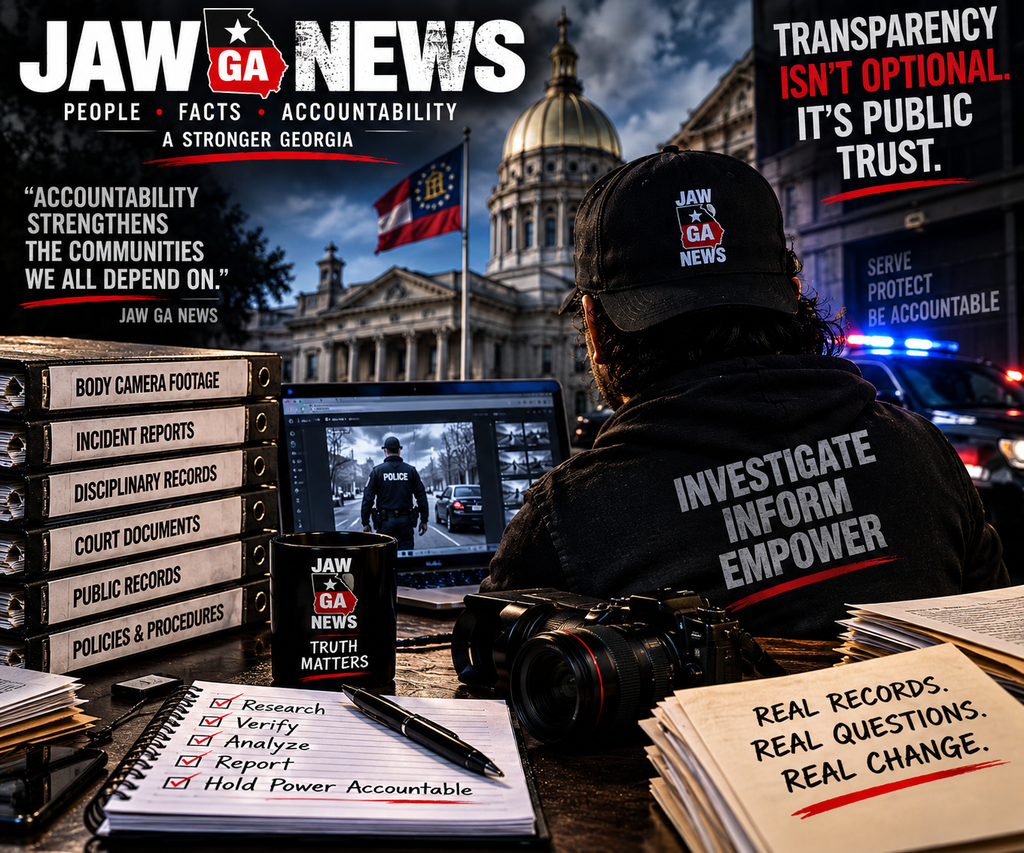
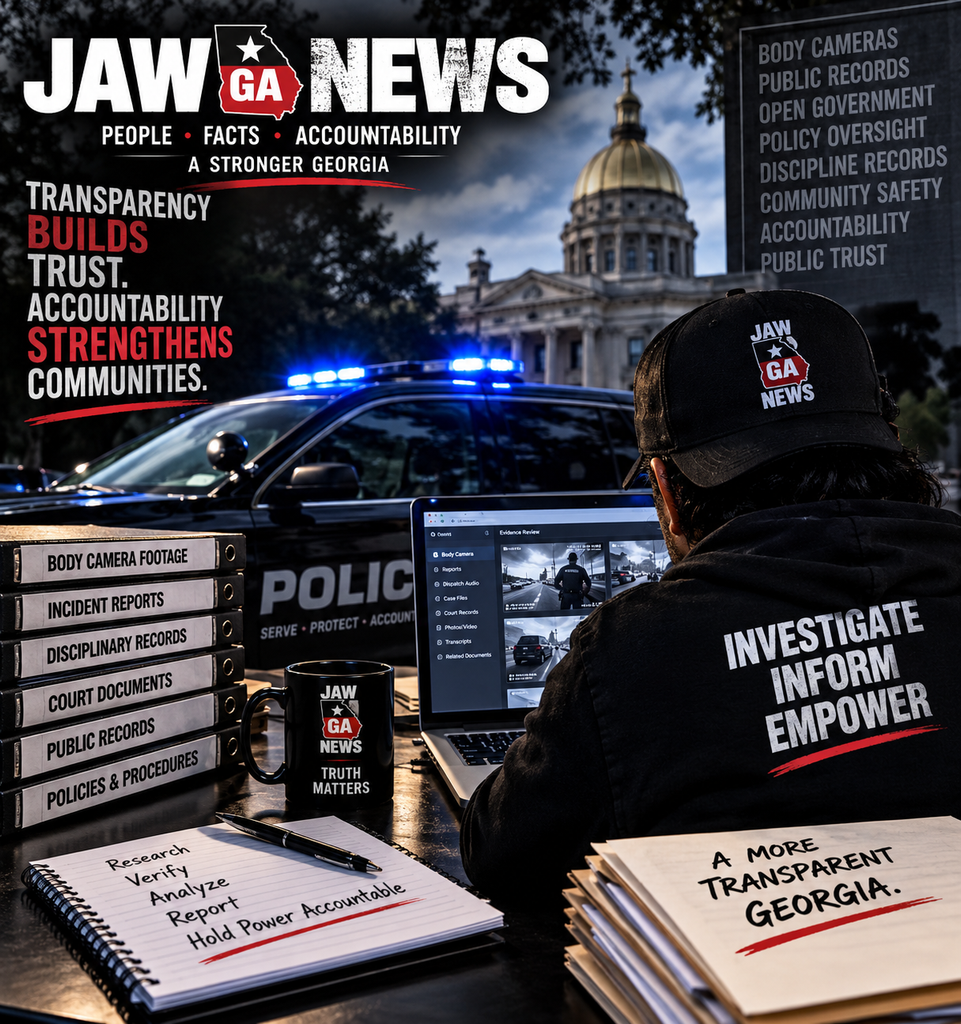
Transparency in law enforcement is sometimes treated as though it places officers and the public on opposing sides. It should do the opposite. When departments release records lawfully, maintain reliable body-camera systems, document disciplinary decisions, explain policies, and respond clearly to legitimate public questions, they give communities something more valuable than reassurance: evidence from which trust can be built.
There are also legitimate limits to transparency. Active investigations, victim privacy, confidential information, officer safety, and other legally protected interests can restrict what an agency may release. Responsible journalism must recognize those boundaries. But when information is withheld, the public is entitled to know the legal basis for that decision when the law requires it. “We can’t release this” and “we don’t want this examined” are not the same thing.
At JAW GA News, our goal is therefore not unrestricted disclosure at any cost. It is lawful transparency paired with meaningful accountability. Good officers deserve reporting that recognizes when the evidence supports their actions. Citizens deserve answers when evidence raises legitimate concerns. And law-enforcement agencies earn stronger public confidence when they demonstrate that accountability is part of the institution rather than something imposed only after controversy erupts.
Wrapping Up with Key Insights
Transparency in law enforcement is not about weakening the people responsible for protecting our communities. Done properly, it strengthens both policing and public trust. Officers who perform their duties lawfully deserve a record that demonstrates it, while citizens who raise legitimate concerns deserve those concerns to be examined through evidence rather than dismissed or amplified through assumptions.
At JAW GA News, we believe accountability should be consistent. We will scrutinize allegations against officers just as carefully as we scrutinize the officers themselves. We will examine body-camera footage, public records, court documents, disciplinary histories, official statements, policies, and other relevant evidence before drawing conclusions. The badge does not establish guilt, and it does not provide immunity from legitimate scrutiny.
Trust cannot be ordered, demanded, or manufactured through public relations. It grows when institutions demonstrate that questions are welcome, mistakes are addressed, misconduct has consequences, good officers are treated fairly, and the public can see how authority is being exercised.
That is why transparency matters.
Support good policing. Expose documented misconduct. Protect due process. Demand accountability. Follow the evidence.
Because the strongest relationship between law enforcement and the communities they serve is not built on unquestioning loyalty or automatic suspicion.
It is built on truth.