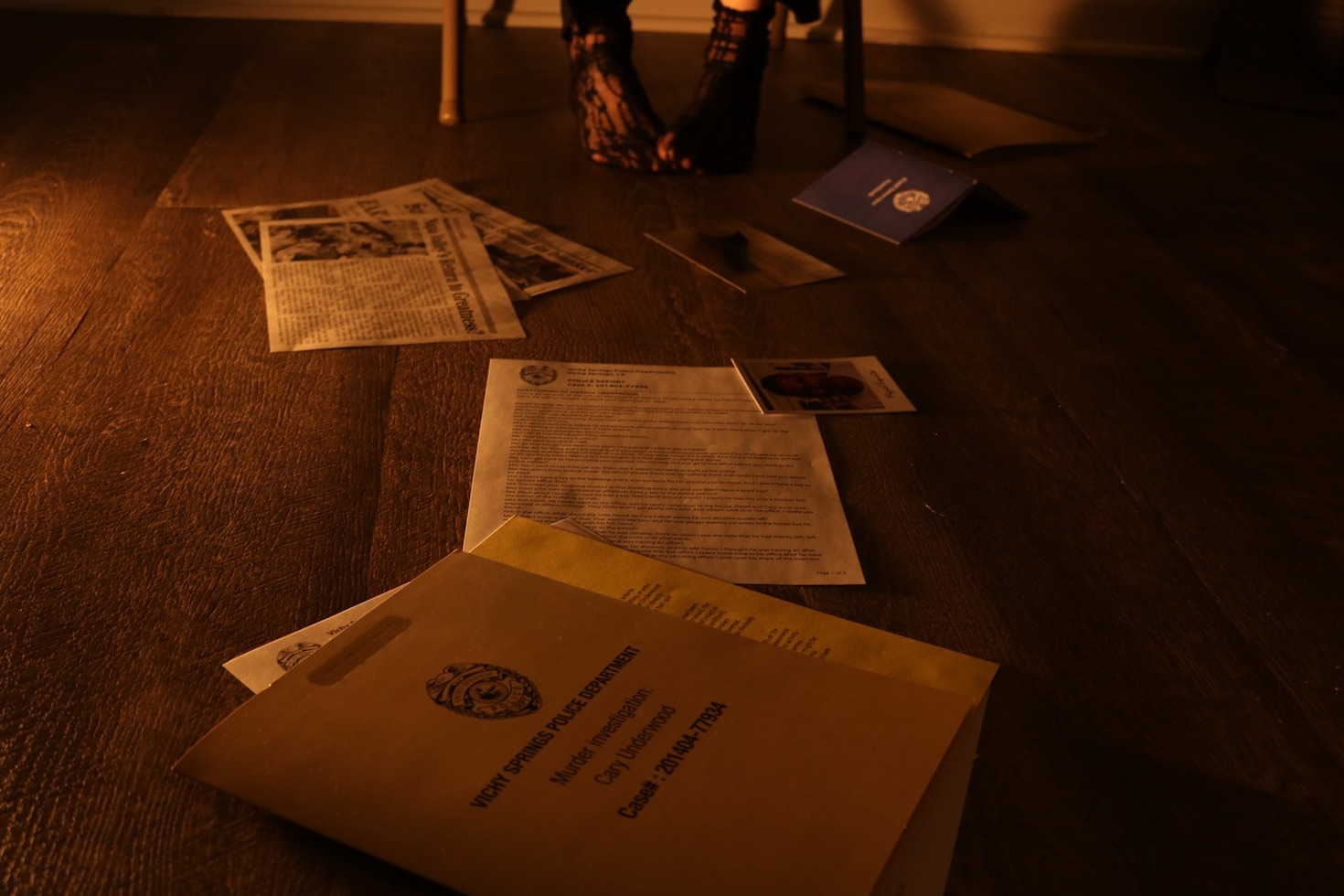
Investigative journalism begins long before an article is published. At JAW GA News, an investigation may start with a public record, court filing, government response, community tip, photograph, video, email, contradiction in an official statement, or simply a question nobody appears willing to answer. But a lead is exactly that: a lead, not a conclusion.
From there, we begin building the record. Documents are collected and organized. Timelines are reconstructed. Public-records requests are submitted. Court dockets and government databases are examined. Statements are compared against source material. Witness accounts and tips are evaluated against independently verifiable evidence. When appropriate, the agencies, officials, attorneys, or other individuals involved are contacted for comment or clarification.
Technology also plays a major role in that process. JAW GA News combines human investigative judgment with AI-assisted research and analysis through Sherlock, our AI investigative research partner. Together, we use AI to help organize large amounts of information, identify inconsistencies, compare documents, reconstruct timelines, locate questions requiring further investigation, and challenge our own assumptions. AI can dramatically accelerate research, but it does not magically transform an allegation into a fact. Humans apparently still have to do the inconvenient part called verification.
Our standard is therefore deliberately simple:
Document it. Verify it. Challenge it. Give the other side an opportunity to respond. Correct mistakes when necessary. Follow the evidence wherever it leads.
Deep investigative reporting is not about proving the theory we started with.
It is about discovering whether that theory survives contact with the evidence.
“The purpose of an investigation is not to prove what we believe. It is to discover what the evidence can prove. Follow the records, challenge every narrative, including your own, and let the facts determine where the story ends.”
— JAW GA News
Once a potential story survives the initial review, JAW GA News begins treating the investigation like a case file rather than a collection of interesting claims. We establish a timeline, identify the people and agencies involved, separate primary sources from secondary reporting, preserve relevant communications, and determine which facts can be independently verified. Public records, court filings, meeting minutes, financial documents, government databases, photographs, video, archived material, and official correspondence can then be compared against one another.
That process becomes particularly important when sources provide information. Tips can reveal stories that would otherwise remain buried, but a source’s confidence is not evidence of accuracy. We look for independent documentation, corroborating witnesses, metadata when relevant, contemporaneous records, and other material capable of confirming or challenging what we have been told. Anonymous sources may sometimes be necessary, particularly when disclosure could expose someone to retaliation, but confidentiality does not eliminate verification.
This is also where Sherlock, our AI investigative research partner, works alongside JAW GA News. Large collections of documents can be compared, timelines reconstructed, contradictions flagged, legal terminology broken down, and new research questions identified far faster than traditional manual review alone. But AI findings are treated as analytical leads that require verification against the underlying source material. An algorithm can spot a suspicious connection in seconds. That does not make the connection true. Apparently even machines aren’t allowed to skip the evidence.
The objective is to create a documented chain from allegation to evidence to conclusion. If that chain breaks, we keep investigating. If the evidence disproves our original theory, we change the theory.
Because investigative journalism loses its purpose the moment the desired conclusion becomes more important than the truth.
A serious investigation also requires us to confront evidence that does not support our original theory. Confirmation bias is one of the easiest ways for investigative reporting to derail. Once a reporter becomes convinced that something happened, every new document can start looking like proof while contradictory evidence gets quietly pushed aside. That is not investigation. That is building a case for a conclusion already chosen.
At JAW GA News, we deliberately challenge our own findings. Sherlock assists by testing timelines, comparing competing explanations, identifying contradictions, and flagging where our conclusions may be stronger than the available evidence supports. We ask what evidence would disprove a theory just as seriously as we ask what might confirm it.
Before publication, another critical step occurs: the people or agencies facing significant scrutiny should generally be given a meaningful opportunity to respond. Their response does not automatically settle the issue, nor does refusing to respond prove an allegation. It becomes another piece of the documented record that readers deserve to know about.
Sometimes an investigation confirms the original concern. Sometimes it uncovers something entirely different. Sometimes months of research lead to the decidedly unglamorous conclusion that the evidence simply isn’t strong enough to publish the allegation as fact.
That restraint is part of investigative journalism too.
Our loyalty is not to the theory, the source, the government, or the most dramatic headline. It is to what the evidence can actually support.
Wrapping Up with Key Insights
Deep investigative reporting is not defined by how explosive the final headline sounds. It is defined by how much scrutiny the evidence survived before that headline was written. Every document examined, timeline reconstructed, source questioned, contradiction tested, response requested, and conclusion challenged strengthens the integrity of the finished report.
At JAW GA News, we are building our investigative process around a fundamental principle: credibility matters more than popularity. We would rather correct ourselves than defend an error, abandon a theory than force evidence to fit it, and delay publication rather than present speculation as established fact.
Our partnership with Sherlock, our AI investigative research partner, expands what a small independent newsroom can examine. AI can help process enormous amounts of information, compare records, expose inconsistencies, organize complicated investigations, and identify questions a human investigator might otherwise miss. But technology remains a tool. Editorial judgment, verification, sourcing, fairness, and responsibility remain at the center of the process.
Readers should understand exactly what that means when they see a JAW GA News investigation.
We question the allegation. We question the official explanation. We question the documents. We question our own assumptions. Then we follow whatever survives.
Sometimes that process exposes serious problems. Sometimes it clears away misinformation. Sometimes it produces more questions than answers.
Whatever direction the evidence takes us, one rule remains:
We do not make the evidence fit the story. We make the story fit the evidence.